

Cardiology medical billing asks more of a billing team than almost any other specialty. A single day in a cardiology practice can include a diagnostic catheterization, an echocardiogram, a nuclear stress test, a pacemaker check, and a dozen follow-up office visits. Each of these services follows its own coding rules, its own modifier requirements, and its own payer policies.
When one detail is missed, the claim is denied. Because cardiology procedures carry high reimbursement values, each denial removes a meaningful amount of revenue from your practice. Our team handles cardiology billing with the attention these claims need, so your practice gets paid correctly for the care it already delivered.
What Makes Cardiology Medical Billing More Complex Than Other Specialties?
Cardiology medical billing is more complex because cardiology claims combine high-value procedures, split professional and technical billing, add-on codes that depend on a primary procedure, and strict prior authorization rules. A general billing team usually sees these situations only occasionally. A cardiology practice sees all of them every week.
Why Does One Coding Error Cost a Cardiology Practice So Much?
Most primary care claims are office visits with modest reimbursement. If one of those claims is denied, the loss is small and easy to recover. Cardiology is different. A cardiac catheterization, an electrophysiology study, or a device implant can each represent several thousand dollars in a single claim.
When one of these claims is denied, the practice waits weeks or months for payment. Some denied claims are never recovered at all, because the appeal window closes or the documentation is never corrected. Over a full year, a small number of these denials can add up to a serious revenue gap.
How Do Professional and Technical Components Affect Cardiology Billing?
Many cardiology tests have two billable parts. The technical component covers the equipment, the facility, and the staff who run the test. The professional component covers the cardiologist who reads the results and writes the report.
If your practice owns the echocardiography or nuclear imaging equipment, you may bill both parts together under one global code. If a hospital or imaging center owns the equipment, your practice bills only the professional component, using modifier 26. Billing the wrong version is one of the most common reasons cardiology claims are denied or paid incorrectly.
Why Do Add-On Codes Make Cath Lab Billing Harder to Get Right?
Interventional cardiology relies heavily on add-on codes. These codes describe extra work performed during a primary procedure, such as placing an additional stent in a second vessel. An add-on code cannot be billed by itself. It must appear on the same claim as the correct primary procedure code. When that link is missing or incorrect, the payer rejects the add-on, and the practice loses payment for work that was actually performed.
What Does Our Cardiology Revenue Cycle Management Include?
Our cardiology revenue cycle management covers each claim from the day a procedure is scheduled until the payment is posted. That includes prior authorization, charge capture, cardiology medical billing and coding, device and remote monitoring billing, and denial follow-up. Each step is handled by people who understand cardiology claims specifically.
How Do We Handle Prior Authorization for Cardiac Procedures?
Most commercial payers and many Medicare Advantage plans require prior authorization for cardiac catheterization, nuclear stress testing, and advanced cardiac imaging. If the procedure is performed without an approved authorization, the claim is usually denied, even when the procedure was medically necessary.
We request authorization as soon as the procedure is scheduled. We track each request until it is approved, and we tell your front desk right away if a payer asks for more clinical information. This way, coverage problems are solved before the patient arrives, not after the claim is filed.
How Do We Capture Every Charge From a Cath Lab Case?
One cath lab case can produce several separate charges. A typical case might include a diagnostic catheterization, coronary angiography, an intervention such as angioplasty, one or more stents, and moderate sedation. Each of these items needs its own line on the claim.
We review the procedure report against the charges entered for every case. If a stent, a second vessel, or a sedation service appears in the report but not on the claim, we catch it before submission. Missed charges are one of the quietest ways cardiology practices lose revenue, because nobody receives a denial for a charge that was never billed.
How Do Our Coders Assign CPT and ICD-10 Codes for Cardiology Procedures?
Our cardiology coding services start with the physician’s documentation, not with a default code. We read the procedure note to confirm which vessels were treated, which approach was used, and which diagnoses support medical necessity. Then we assign the CPT code that matches the procedure performed and the ICD-10 code that explains why it was needed.
We also apply the modifiers each payer expects. Common examples include:
- Modifier 26 for the professional component of a test read on facility equipment
- Modifier 25 for a separate office visit on the same day as a procedure
- Modifier 59 or an X modifier when two services are truly distinct
How Are Echo and Nuclear Studies Billed When a Hospital Owns the Equipment?
When your cardiologist reads an echocardiogram or a nuclear stress test performed on hospital equipment, your practice bills only the interpretation. The hospital bills the technical side separately. We confirm the place of service and the equipment owner for every study, so your practice bills the correct component and avoids duplicate or conflicting claims with the facility.
How Do We Bill Cardiac Device Checks and Remote Monitoring?
Device follow-up has its own billing rules. In-office interrogations of pacemakers and implantable defibrillators are billed per session. Remote monitoring is usually billed over a set monitoring period, often 30 or 90 days depending on the service, and only once that period’s requirements are met.
We track each patient’s monitoring period separately from your regular office visit billing. This prevents two common problems. The first is billing a remote monitoring period too early, which triggers a denial. The second is forgetting to bill a completed period at all, which leaves revenue uncollected.
Why Do Cardiology Claims Get Denied?
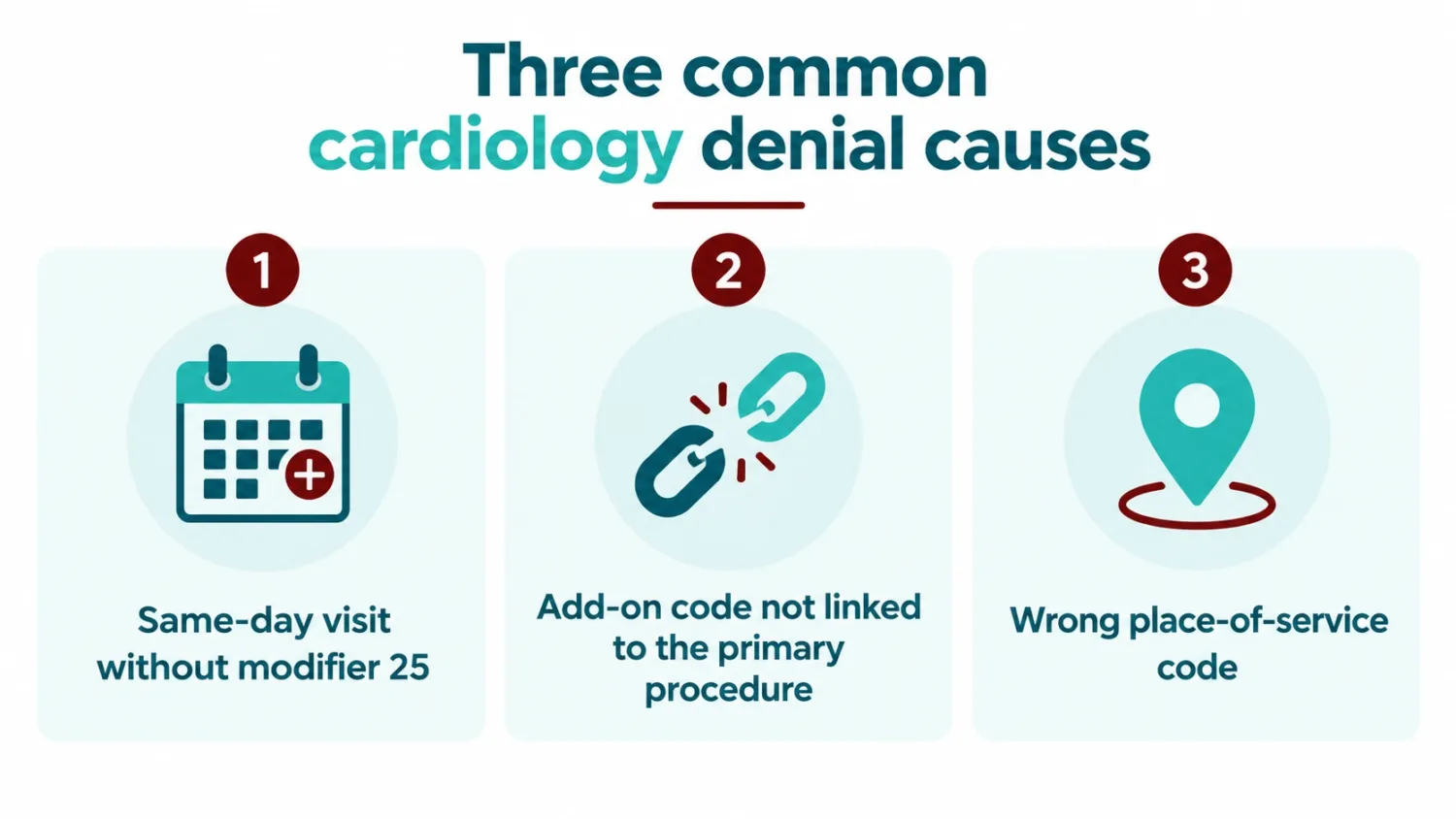
Most cardiology claim denials come from a short list of repeat problems: missing modifiers, add-on codes that are not linked to a primary procedure, missing prior authorizations, and incorrect place-of-service codes. These are administrative errors, not clinical ones. Most of them can be prevented with the right review before a claim is submitted.
What Happens When a Stress Test and an Office Visit Are Billed on the Same Day?
A patient may come in for a scheduled stress test and also discuss a new symptom with the cardiologist. Both services can be billed, but the office visit needs modifier 25, and the visit note must show a separate, significant reason for that visit. Without both, the payer treats the visit as part of the stress test and denies it.
Why Do Stent Add-On Codes Get Rejected?
When a cardiologist places stents in more than one vessel, the additional vessel is reported with an add-on code. If that add-on code is billed on a different claim, or listed without the correct primary code, the payer cannot see the connection. The add-on is rejected as if it were a standalone service, and the practice loses payment for real work.
How Does the Wrong Place-of-Service Code Cause a Denied Device Check?
A pacemaker check performed in the office, in the hospital, or through remote monitoring each needs a different place-of-service code. If the code on the claim does not match where the service actually happened, the payer denies it. The service itself was correct, but the claim still fails. This is one of the easiest cardiology denials to prevent with a simple check before submission.
How Does Our Cardiology Billing Company Prevent Claim Denials?
Our cardiology billing company treats every denial as a signal about where the process broke. We do not simply resubmit denied claims. We identify the cause, correct it, appeal when the documentation supports it, and then change the step that caused the problem so the same denial does not come back next month.
- We identify every denied cardiology claim. Each denial is logged with the payer, the procedure, the denial code, and the date. Nothing sits in a queue without review.
- We sort denials by their root cause. We group each denial by what actually went wrong, such as a missing authorization, a coding error, a bundling issue, or missing documentation. This shows which problems repeat.
- We correct the claim and resubmit it. We fix the specific error on the claim and resubmit it within the payer’s filing window.
- We appeal when the documentation supports it. If a payer denies a claim that was billed correctly, we prepare a written appeal with the clinical records and coding rationale the payer asked for.
- We change the process so the denial does not repeat. Once a cause is clear, we adjust the step that produced it, such as adding an authorization check or a modifier review for that procedure type.
We also report denials to your practice by cause, not as a single total. You can see exactly which issues are costing you payments and which ones are already fixed. Learn more about our revenue cycle management services and medical coding services.
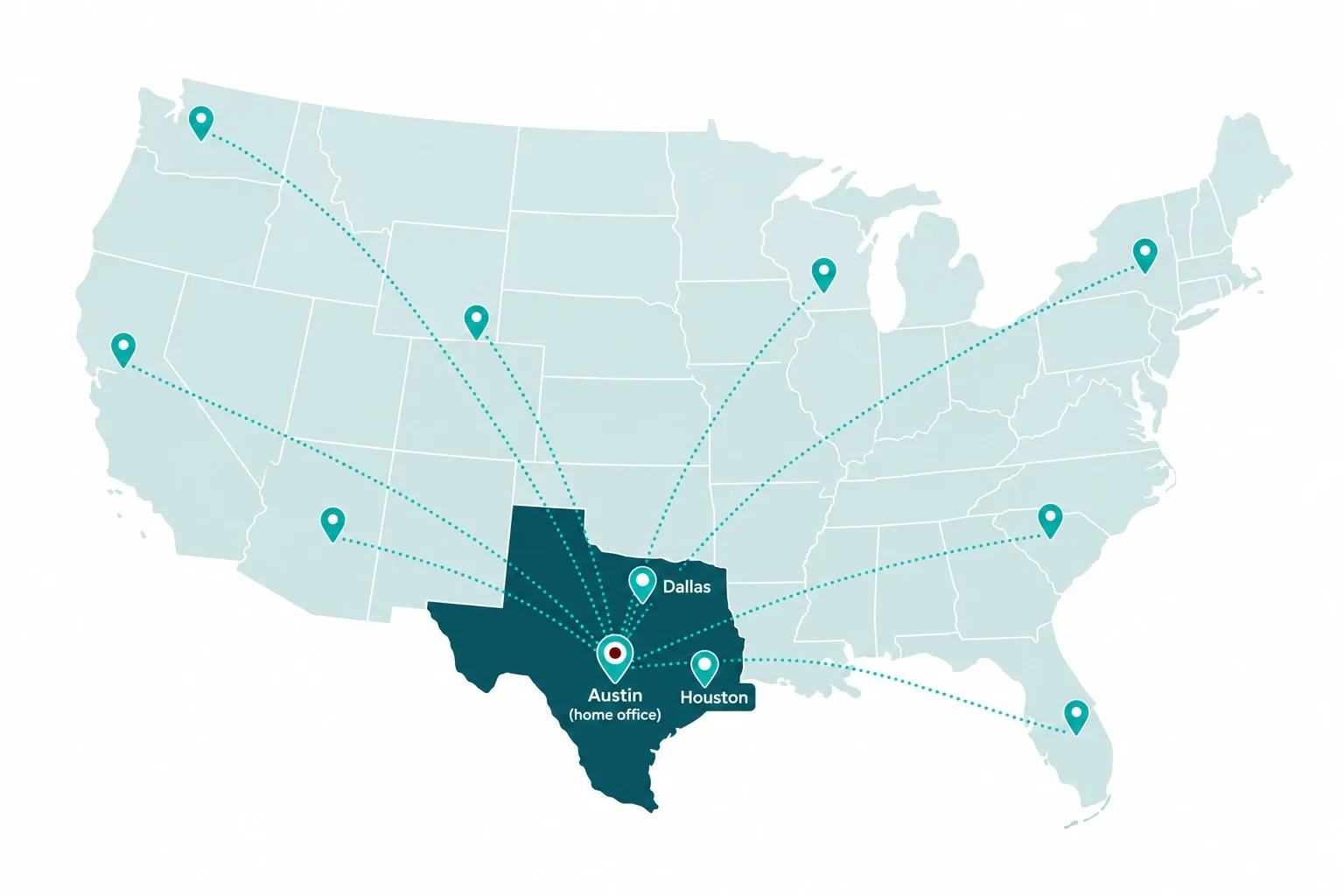
Can Our Austin-Based Team Handle Cardiology Billing for Practices Nationwide?
Yes. Prime Medical Revenue provides cardiology billing services to practices across the United States. Our team is based in Austin, Texas, and we work closely with cardiology practices in Houston and Dallas, the two major Texas cities nearest to our home office. Our location shapes our Texas payer knowledge, but it does not limit where we work.
Medical billing happens inside your practice management system and payer portals, so we can support a cardiology group in Ohio as easily as one in Austin. What changes from state to state is the payer mix, Medicaid rules, and local coverage policies. We learn those rules for each practice we work with.
For practices in Texas, being close by brings an extra advantage. We already work with Texas Medicaid programs, Texas commercial payers, and the prompt-pay rules that apply in the state. Learn more about our work in Austin, Houston, and Dallas.
Which cardiology services does this page cover? This page covers diagnostic and interventional cardiology billing, including cath lab, electrophysiology, echocardiography, nuclear cardiology, and cardiac device claims. If your practice mainly manages chronic heart conditions such as hypertension during routine primary care visits, our Internal Medicine billing page will be a closer fit. You can also browse all the specialties we bill for.
Questions Cardiology Practices Ask Before Outsourcing Their Medical Billing
No. We work inside the systems your practice already uses. Your team keeps its current EHR, scheduling, and documentation workflow. We log in to your practice management system and payer portals to handle billing from there, so your cardiologists and front desk staff do not need to learn new software.
Your existing accounts receivable is not written off or set aside. During the transition, we work your older open claims alongside new charges. We review what is still collectible, follow up with payers on aging claims, and appeal denials that still fall inside the appeal window. We walk through your current A/R with you during onboarding.
The timeline depends on your current systems, your claim volume, and how quickly system access and payer enrollment details can be set up. We give you a specific timeline after we review your setup in the free consultation, so you know what to expect before anything changes.
We reply to practice questions within one business day. If a payer issue affects a scheduled procedure, such as a pending prior authorization, we contact your team as soon as we know so the appointment is not put at risk.
We report denials by cause, not as a single number. You can see how many claims were denied for missing authorizations, coding issues, bundling, or documentation gaps, and which of those causes have already been fixed. This helps your practice see where revenue is being lost and what is being done about it.
Yes. We review your existing denials, separate the ones that can still be corrected or appealed from the ones past their filing limits, and work the recoverable claims first. We also look for the patterns behind that backlog, so the same problems do not keep building a new one.
Pricing depends on your practice size, claim volume, and the services you need. We explain pricing after a free consultation, once we understand how your practice bills today. If a short billing review would help you decide, we will tell you that as well.
We follow HIPAA-compliant processes for handling protected health information. Access to your systems is limited to the team members who work on your account, and patient information is used only for billing and claim follow-up.
Talk to Our Team About Your Cardiology Claims
If cath lab, electrophysiology, echo, or device claims are coming back denied more often than they should, a short conversation can show where the problems start. Tell us how your practice bills today, and we will explain how our cardiology medical billing team would handle your claims.